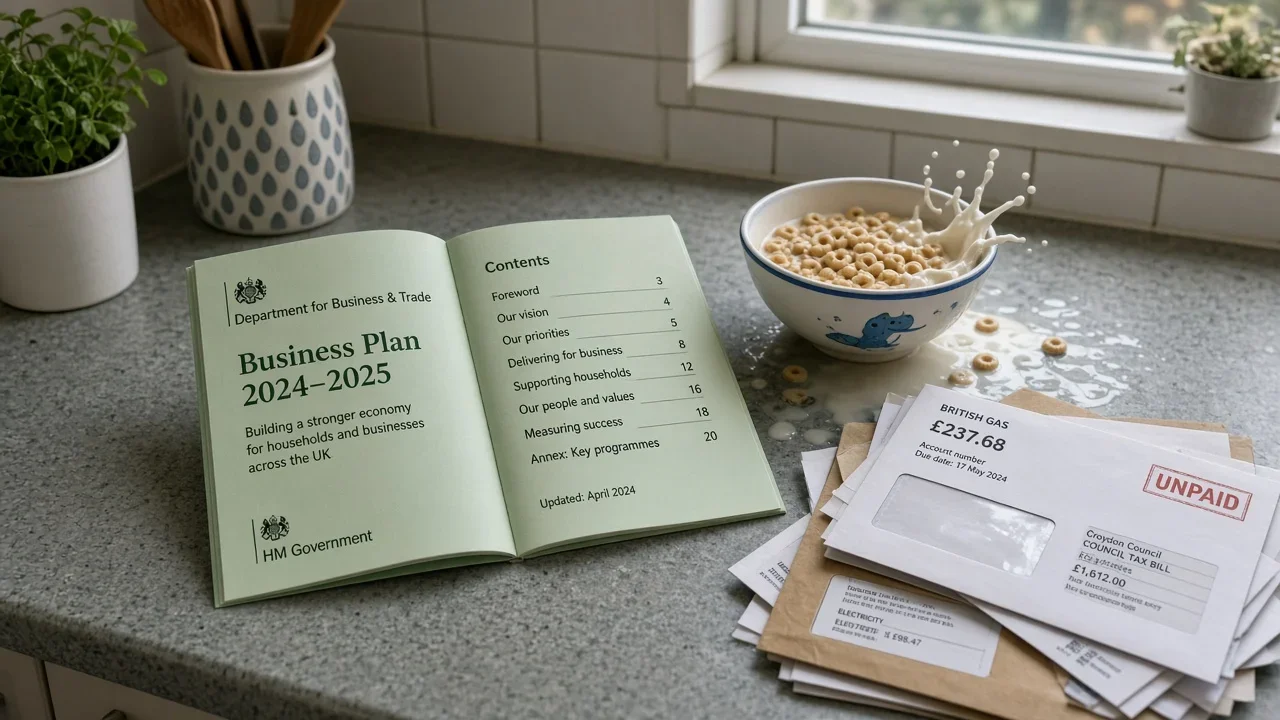
GOV.UK's page on writing a business plan says the document should cover objectives, strategy, sales, marketing, and financial forecasts. It can clarify an idea, expose potential problems, set goals, measure progress, and support an application for investment or a bank loan. The page then points readers to external templates and a cash-flow forecast. The brevity is consistent with a signpost, and the linked tools may help someone start.
But the promise that a plan can spot potential problems is much larger than the guidance offered. The page treats planning mainly as writing and finance presentation when many of the most consequential problems are legal, operational, personal, and specific to the kind of business being started.
A forecast does not tell a food operator which approvals must precede a sale, a contractor how liability travels through a subcontract, an online seller which consumer rights apply, or an employer when an informal arrangement becomes an employment obligation. These issues are covered elsewhere across government, but the planning page does not help a new owner discover which branches matter. A generic template can therefore look complete while omitting the requirements most capable of stopping the business.
The financing statement is also too categorical. A plan is often useful and lenders commonly request structured information, but "you'll need a business plan" collapses different products and decisions. A bank assessing an established sole trader, a startup loan, equipment finance, and equity investment will not evaluate the same evidence. Some will care more about trading history, collateral, personal guarantees, contracts, or cash coverage than a conventional narrative. The entrepreneur needs to understand the decision being made, not simply produce a document called a business plan.
Persuasion deserves caution too. The page says a plan can convince customers, suppliers, and potential employees to support the business. Those groups should not receive the same version of an optimistic case prepared for capital providers. A supplier needs credible payment terms. An employee needs an honest account of role and security. A customer needs evidence the company can deliver and remedy failure. Reusing a promotional forecast can conceal rather than clarify their different risks.
There is a personal balance sheet behind many small companies that the page leaves invisible. Early cash flow may depend on unpaid owner labor, household savings, a partner's income, personal credit, or a guarantee over assets. A plan can show the business reaching break-even while the owner runs out of money first. Planning should therefore include a household runway, tax reserves, minimum income needs, insurance, and a limit on the losses the founder is prepared to absorb.
A stronger public starting point would route users by business activity and consequence. What will you sell, where, to whom, with whose data, premises, labor, money, or physical safety involved? The answers should generate a checklist of relevant official obligations, likely cash-timing risks, and local support. Forecasts should include scenarios and stop conditions, while templates should label untested assumptions rather than turning blank cells into confident numbers.
The addendum is that a business plan cannot expose problems it was never designed to ask about. A short government page need not teach every industry, but it should connect the document to the public rules and personal exposures that make planning real. Writing objectives and forecasts is useful. Knowing which promise creates a legal duty, which delay breaks cash flow, and how much household security is at risk is what turns a plan from a persuasive file into protection against avoidable failure.